Category: Gambling News

Updates and stories about the gambling world in South Africa, including industry changes, new trends, and important announcements.

  • How to Check if a Betting Site is Licensed in South Africa

    How to Check if a Betting Site is Licensed in South Africa

    One thing that still surprises me is how many South African bettors sign up to a betting site without checking if it is actually locally licensed in South Africa. They see a welcome bonus, they see odds, maybe a friend sent them a referral link, and they register. No questions asked.

    That is a problem. Because if the betting site is not licensed by a South African provincial gambling board, there is no protection. No gambling board to escalate to if something goes wrong. No guarantee your funds are held safely. No obligation for the operator to process your withdrawal.

    I built a tool on Betline.co.za that lets you check if a betting site is locally licensed in South Africa in a few seconds. You type in a betting site name, and it tells you whether the operator holds a valid South African licence, which provincial gambling board issued it, and what the licence number is. It has been live for months now, and it still does exactly what it was built to do.

    The reason I built the Betline licence verification tool is simple.

    Before the tool existed, checking a betting site’s South African licence meant visiting individual provincial gambling board websites, searching through PDFs or outdated operator lists, and hoping the information was current. Most bettors were never going to do that. They would just assume a betting site was locally licensed because it looked professional or because it accepted South African payment methods.

    That assumption is where people get caught. A betting site can look polished, run smoothly, and still have no South African gambling licence at all. Deposits go through because payment processors do not always verify whether a betting operator is locally licensed. Everything feels fine until you try to withdraw, or until something goes wrong and there is no provincial gambling board to contact.

    The Betline licence verification tool was designed to remove that guesswork.

    You type in a betting site name. It does not need to be exact. The Betline licence verification tool handles variations. If you enter “mbet”, “mbet south africa”, “mbet sa”, or even “mbets”, it treats them as the same query. It strips formatting, removes symbols, and matches against a structured database of verified South African betting operators.

    You get one of three results:

    Locally licensed, showing the registered company name of the operator behind the betting site, which provincial gambling board issued the bookmakers licence, and the licence number.

    Not locally licensed in South Africa, with a clear warning. Or unknown, meaning no verified match was found and you should double check the operator name or avoid the betting site until you can confirm its South African licensing status.

    If the result comes back unlicensed or unknown, the tool points you toward a list of locally licensed betting sites in South Africa. The idea is that you should never be left without a verified alternative.

    The National Gambling Board recently launched its own verification portal.

    A few days ago, the NGB went live with a verified operators portal. It is a centralised database of every legally licensed gambling operator in South Africa, built together with provincial licensing authorities across all nine provinces. That is a significant move, and it is good for the industry. The more ways bettors can verify whether a betting site is locally licensed, the fewer players end up on illegal platforms.

    The Betline licence verification tool has been doing this work for months already, but the two serve different purposes. The NGB portal is the official source backed by government, confirming licensed operators and their authorisation to offer gambling services in South Africa. The Betline.co.za tool is an independent, practical, search-based layer focused on South African betting sites that makes the same licence check faster when confirming whether a betting site is locally licensed. Both exist to solve the same problem, which is keeping South African bettors away from unlicensed online betting sites.

    Even with verification tools available, there are a few things worth checking yourself.

    A locally licensed betting site will usually display its South African licence number in the footer of the website. You should see the name of a recognised provincial gambling board, such as the Western Cape Gambling and Racing Board, the Gauteng Gambling Board, or the Mpumalanga Economic Regulator. The betting site should support local payment methods, process transactions in South African rand, require FICA verification before processing withdrawals, and provide responsible gambling tools such as deposit limits, self-exclusion, and a link to the National Responsible Gambling Programme. If those basics are missing, that is a red flag regardless of how polished the betting site looks on the surface.

    Betting sites that only accept cryptocurrency, betting sites that promote international licences from jurisdictions like Curaçao, Malta, or Gibraltar with no South African provincial gambling board behind them, and betting sites with vague or missing terms and conditions should all raise concerns. These are patterns you see repeatedly with unlicensed offshore operators targeting South African players.

    The South African Bookmakers’ Association has said that around 62% of online gambling activity in the country happens on unlicensed betting sites.

    That is not a small number. It means the majority of bettors in South Africa are placing bets on platforms with no local oversight from a provincial gambling board, no fund protection, and no legal recourse if something goes wrong. It also means the problem is not niche. It is widespread, and it affects real people.

    Verifying whether a betting site is locally licensed in South Africa should not be an afterthought. It should happen before you register, before you deposit, and before you place a single bet. The tools exist now, both the official NGB portal and independent tools like the Betline licence checker. There is no reason to skip this step.

    Once a bet is placed on an unlicensed betting site, it is already too late to ask whether the operator was locally licensed in South Africa.

    Read More:

    If you want to see which betting sites are verified and locally licensed in South Africa, check out the Betline betting site comparison for a full list of licensed operators.

    Responsible Gambling:

    BetBay supports safe and responsible gambling. Winners know when to stop. If you or someone you know needs help, contact the South African Responsible Gambling Foundation for free confidential support at www.responsiblegambling.org.za or call 0800 006 008.

  • Why Offshore Betting Sites Are Risky for South Africans

    Why Offshore Betting Sites Are Risky for South Africans

    One thing I’ve noticed over time is that most problems South African players have with offshore betting sites don’t start with betting itself. Bets usually place without issue. Deposits often go through. Everything feels fine at the beginning.

    The trouble almost always starts later, when administration, verification, and compliance come into play.

    This is where offshore betting sites and South African betting sites are fundamentally different, and it’s also where many local players run into serious problems. Offshore betting sites are built around foreign systems, foreign banking rules, and foreign verification standards. On paper, that might not sound like a major issue. In reality, it creates constant friction for South African players.

    South African betting sites are designed around local realities. Offshore betting sites are not.

    That difference matters far more than most players expect.

    When a South African player signs up to a locally licensed betting site, the verification process is usually clear and predictable. The operator understands South African identity documents, local proof of address formats, and how local banks issue statements and confirmations. They know what a South African ID looks like. They understand how FICA-style verification works in practice.

    Offshore betting sites often expect something very different.

    Many offshore platforms are designed around European or international users. Their compliance systems are built for passports, traditional utility bills, and banking documents that simply do not exist in the same way for many South Africans. When a player uploads documents that are perfectly normal locally, offshore systems may flag them as invalid, unclear, or incomplete.

    This is not always because the player has done something wrong. It’s because the offshore platform’s verification process was never built with South African players in mind.

    The biggest issues usually appear when a player tries to withdraw.

    At that point, offshore betting sites often trigger enhanced verification checks. Documents that were accepted during sign-up are suddenly no longer sufficient. Additional proof is requested. Sometimes the same documents are asked for repeatedly, with slight changes in wording that are difficult or impossible to satisfy.

    Proof of address is one of the most common sticking points. Many South Africans do not receive traditional utility bills in their own name. People rent, live with family, or use prepaid services. Local betting sites understand this and can work with alternative documents. Offshore betting sites often cannot. Their systems are rigid, and anything that doesn’t match their predefined checklist gets rejected.

    Bank verification creates another layer of difficulty.

    South African banking systems operate differently from those in many other countries. Bank statements, account confirmations, and payment references may not match what offshore compliance teams expect. Even when a player submits a legitimate bank statement, it can be rejected simply because it does not fit a foreign template.

    From the player’s perspective, everything is correct, yet nothing is accepted.

    Payment processing adds even more risk.

    Many offshore betting sites rely on foreign payment processors. These processors have their own compliance rules, which do not always align with South African banking practices. Deposits may work smoothly, but withdrawals can trigger additional checks that local banks do not support in the same way. This can leave funds approved on the betting site’s side but delayed or blocked by the payment processor.

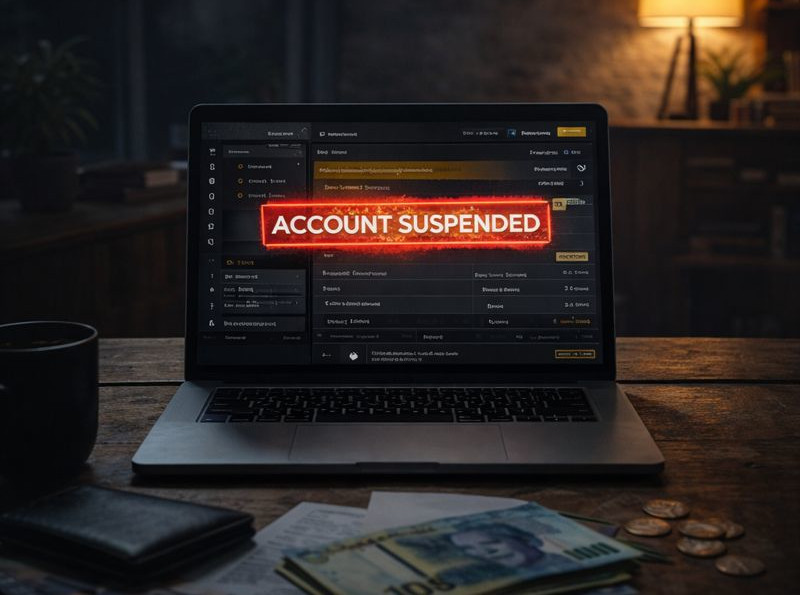
    There is also a risk that often goes unspoken. Offshore betting sites that operate in South Africa without the relevant local licensing can be blocked by South African authorities. When that happens, access to the site may suddenly disappear. Transactions can be interrupted. Accounts can become inaccessible.

    If funds are sitting in an offshore account at that point, players may struggle to recover them. Withdrawals in progress can fail. Deposits already made may be impossible to reverse. In the worst cases, funds and transaction records are effectively lost.

    Another major difference is regulation and accountability.

    Offshore betting sites are not regulated by South African authorities. That means if something goes wrong, there is no local regulator that can take action against the operator. No penalties can be enforced. No investigations can be launched locally. No binding decisions can be made in favour of the player.

    With locally licensed betting sites, there is at least a recognised authority overseeing how the site operates. With offshore sites, South African players have no such protection. Complaints usually go nowhere, and disputes are handled entirely on the operator’s terms.

    Personal information is another serious concern.

    Signing up to a betting site requires players to submit sensitive personal data, including identity documents, proof of address, and sometimes banking details. When this information is submitted to a locally licensed South African betting site, it is protected by local laws and regulatory requirements.

    With offshore betting sites, that protection does not apply.

    Personal data is stored outside South Africa, under foreign legal systems. It may be shared with third parties, used for marketing, or handled in ways that would not be allowed locally. If that information is leaked, misused, or accessed by criminal networks, South African players have very little recourse.

    Identity documents and banking details are valuable targets. Handing them over to an offshore operator with no local accountability introduces risks that many players underestimate.

    It’s important to be fair. Offshore betting sites are not always acting maliciously. In many cases, they are simply enforcing compliance rules designed for other countries. The problem is that those rules don’t translate well to South Africa, and there is no obligation for offshore operators to adapt.

    For South African players, this means that even honest, cooperative users can struggle to meet requirements that were never designed for them in the first place.

    This is why so many players only experience serious problems after they start winning or try to withdraw meaningful amounts. Betting itself is universal. Administration, verification, regulation, and enforcement are not.

    Locally licensed betting sites may feel stricter upfront, but their systems are built around South African realities. They understand local documents, local banks, and local compliance requirements. When problems arise, there is usually a practical path to resolution.

    Offshore betting sites often lack that local understanding and local accountability. When something doesn’t fit their process, there is little flexibility and no South African authority to step in.

    In the end, this is not about odds or bonuses. It’s about whether a betting site’s administrative, verification, and regulatory systems are compatible with South African life and South African law. In most cases, offshore betting sites simply are not.

    For South African players, choosing a locally licensed betting site is less about convenience and more about protection. It means dealing with systems that understand how things work here, and operators that can actually be held accountable when something goes wrong.

    That gap is what causes most of the frustration, and it’s why offshore betting sites so often end badly for South African players.

    What Do You Think?

    Offshore betting sites and locally licensed South African sites work very differently, especially when it comes to verification, withdrawals, and accountability. Some players feel local rules are too restrictive, while others value the protection they offer.

    What has your experience been? Have offshore betting sites worked for you, or caused problems? Share your thoughts in the comments below. Betbay wants to hear what real South African players think about the future of online betting.

    Read More:

    If you’re looking for a safe, locally licensed betting site, check out my post on where to bet online for tips and trusted locally licenced options.

    Responsible Gambling:

    BetBay supports safe and responsible gambling. If you or someone you know needs help, contact the South African Responsible Gambling Foundation for free confidential support at www.responsiblegambling.org.za or call 0800 006 008.
  • Online Gambling Regulation vs Prohibition for South Africans

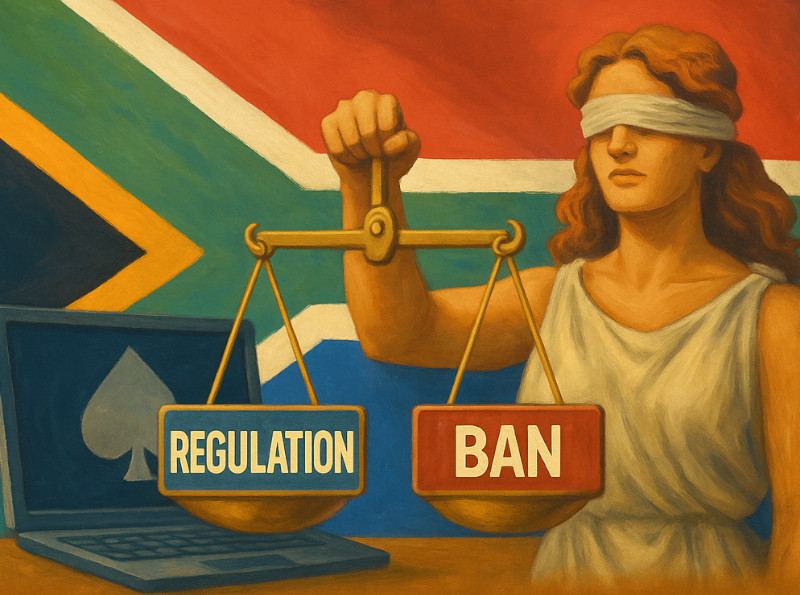
    Online Gambling Regulation vs Prohibition for South Africans

    South Africa finds itself at a defining moment in the world of online gambling. The rapid rise of digital betting, powered by smartphones, instant payments and widespread internet access, has made online gaming a normal part of everyday entertainment for millions of South Africans. The legal landscape, however, has not moved at the same pace. While the law still distinguishes between different types of gambling, the reality is that licensed South African bookmakers are now offering a full range of casino-style games including slots, crash games, and live dealer tables alongside traditional sports betting. These products are regulated under bookmaker licences issued by provincial gambling boards, audited for fairness, and required to pay taxes and levies within the country. The challenge is not whether South Africans can legally bet or play casino-style games online, but rather how national law and public policy can keep up with the scale of the market to protect consumers and ensure local benefit.

    The online gambling economy has exploded over the past few years. Mobile betting has become the preferred way to play, and reports estimate that South Africa’s total gambling revenue has already passed the R75 billion mark. The growth is driven by a young, connected population and a strong network of local operators who offer legal access to a wide mix of betting options. Players can place wagers on soccer, rugby or horse racing, and switch seamlessly to slot games, roulette, blackjack or crash-style titles, all from a single account on a licensed local site. This integrated ecosystem has made online gambling part of mainstream entertainment, but it has also exposed how far the country’s national legislation has fallen behind. The current law still reflects an era before mobile technology transformed how people interact with gambling. It has created overlaps, grey zones and inconsistencies that make it hard for both players and operators to navigate confidently.

    The problem is that players are often unsure about how far the legal boundaries extend. Many South Africans don’t realise that while unlicensed offshore casinos remain illegal, locally licensed bookmakers legally offer casino-style games such as slots, crash titles and live dealer tables under their bookmaker licences. These games are audited, regulated and paid out in rand, which keeps them compliant and transparent. The confusion comes in when offshore platforms market to South Africans without local licences, creating the illusion of legitimacy. This legal grey area is where the real risk lies, and it is exactly why clearer national regulation is needed to distinguish between what’s legal, what’s not, and to protect players from being drawn to unverified foreign sites.

    Offshore gambling websites continue to target South African consumers aggressively. These platforms advertise through social media and search engines, accept deposits in rand, and often mimic the appearance of legitimate South African operators. Many players assume that if a website takes local payments it must be legal, but that is not the case. Offshore operators hold licences from foreign jurisdictions that do not fall under South African regulation. They are not required to comply with FICA verification, responsible gambling standards or tax laws. When South Africans play on these sites, they expose themselves to potential fraud, unfair game mechanics, delayed or denied withdrawals, and a total lack of legal recourse. Worse still, every rand spent on an unlicensed offshore platform leaves the country’s economy entirely. That outflow of funds reduces local tax revenue, undermines consumer protection, and creates a system where legitimate domestic businesses compete with unregulated international companies that contribute nothing back.

    This is why the conversation about regulation versus prohibition is so important. Prohibition of online casino gaming has never truly stopped the activity; it has only pushed it underground or offshore. The last major attempt to ban remote casino gambling in South Africa led to the closure of local servers but did nothing to curb the growth of foreign sites. The lesson is clear: when a market demand exists, people will find a way to participate, and blanket bans only weaken regulatory oversight. Regulation, on the other hand, allows the government to define clear rules, license operators, enforce compliance and collect revenue that can be used for social benefit. It also empowers players by giving them a transparent system where they know which sites are safe, who to contact in case of disputes, and how to set personal limits to manage their gambling responsibly.

    The case for regulation is supported by both economic logic and public interest. A properly regulated online gambling sector can generate significant tax income and job creation while also protecting players through enforced standards. Licensed operators already follow strict auditing and fairness requirements, but a modernised national framework could make these protections more uniform across all provinces. Regulation can also make it easier to monitor gambling behaviour, identify problem patterns, and intervene when necessary. Without a national framework, much of that data remains fragmented. Provincial regulators do their best to oversee activity, but cross-border cooperation between provinces and national agencies would make oversight more effective. Modern regulation would also strengthen anti-money-laundering enforcement and keep betting funds flowing within the formal banking system.

    Consumer safety is another major reason to prioritise regulation. Licensed South African bookmakers already use secure payment gateways, identity verification through FICA, and responsible gambling tools that allow players to set deposit or time limits. These safeguards are essential for reducing gambling-related harm. Offshore operators are not required to provide any of these features. They can operate without clear age verification, without deposit limits, and without transparent disclosure of game odds or return-to-player rates. When things go wrong, South African players have no local authority to turn to. Proper regulation ensures accountability and allows authorities to penalise or ban operators that violate consumer protection rules. It also creates trust, which is vital for any sustainable industry.

    The financial stakes are high. Every rand that moves offshore through unlicensed gambling is a rand that does not contribute to South Africa’s GDP, tax base or community development programmes. Local operators pay provincial levies and taxes that support job creation and responsible-gambling initiatives. When players choose unlicensed sites, those benefits disappear. Economists describe this as a “leakage effect,” where national wealth flows outward without any compensating benefit. Regulation reduces this leakage by keeping the activity within the formal economy, ensuring that both the risks and the rewards are managed locally. A well-regulated market can also attract legitimate foreign investment. Technology providers, payment processors and data security firms are more likely to partner with compliant local operators when there is a clear legal structure.

    Opponents of expanded regulation often raise concerns about addiction and social harm. These risks are real, but they are better addressed through oversight and education than through prohibition. Prohibition leaves regulators blind, while regulation gives them visibility. When gambling is licensed and monitored, authorities can collect data to identify problem behaviour, set advertising limits, and require operators to promote responsible-gambling helplines. Licensed operators are also more likely to support harm-reduction campaigns because they have reputations to protect and licences to maintain. Prohibition removes that accountability. It does not make gambling disappear; it simply removes the tools to manage it effectively.

    Another issue is legal clarity. The current situation forces both players and operators to interpret overlapping national and provincial laws. Some of these laws date back to a time when online gambling barely existed. The result is a patchwork system where rules differ between provinces and where national enforcement struggles to keep pace with digital change. Updating legislation would remove this uncertainty. It would clarify that certain types of online gambling, when offered by licensed South African bookmakers, are legal and regulated, while unlicensed offshore sites are not. This clarity would protect consumers, support legitimate businesses, and strengthen the country’s overall regulatory credibility. It would also send a clear message to the international market that South Africa welcomes responsible, compliant gaming investment.

    Beyond the regulatory debate lies the question of how to manage the social side of gambling in a digital age. South Africans are not unique in their appetite for online entertainment. From mobile gaming to streaming, digital leisure is part of modern life. The key is to ensure that gambling fits responsibly into that landscape. Regulation allows for education campaigns, self-exclusion systems and partnerships with public health bodies. It also enables the use of technology to promote safer play. For instance, machine learning tools can flag risky betting patterns and trigger interventions before harm occurs. Without regulation, such innovation is impossible because the industry operates outside of transparent oversight.

    The economic case for regulation is equally persuasive. Global studies show that regulated gambling markets tend to perform better in terms of tax collection, consumer satisfaction and social stability. South Africa’s existing licensed bookmakers have proven that responsible regulation can work. They are audited, they pay taxes, and they operate under clear conditions set by provincial gambling boards. Expanding this model to a more unified national level would streamline compliance and reduce duplication. It would also prevent unfair competition from unlicensed offshore sites that currently face no taxation or enforcement. By treating online gambling as a legitimate, regulated industry, South Africa can balance revenue generation with social responsibility.

    The digital nature of modern gambling also calls for stronger cooperation between regulators, banks and technology companies. Payment providers play a key role in identifying illegal transactions and blocking payments to unlicensed operators. In a regulated environment, this coordination becomes more efficient. Banks can easily verify whether an operator holds a valid licence, and players can transact with confidence. This ecosystem of trust encourages safe participation while making it harder for rogue operators to profit. In the long run, this approach benefits everyone: players enjoy protection, the government gains revenue, and legitimate businesses grow under fair conditions.

    Culturally, the conversation about gambling in South Africa has matured. It is no longer framed purely as a moral issue but as one of responsibility and transparency. Most players simply want entertainment, fair odds, and the reassurance that their money is safe. Regulation provides those assurances. Prohibition, by contrast, breeds uncertainty and drives riskier behaviour. The digital transformation of the gambling sector cannot be reversed, but it can be guided. South Africa has the institutional capacity to build a modern framework that supports innovation while protecting its citizens.

    For South African players, the practical takeaway is simple. Stick to locally licensed sites, check that the operator lists its provincial licence number, and always gamble within your means. When you play on legal South African platforms, your money stays in the local economy, the games are audited, and there is an authority you can turn to if something goes wrong. Avoid offshore websites that promise massive bonuses or payouts in foreign currency. They may look professional, but they operate outside of South African law and offer no protection. Responsible play begins with choosing safe platforms and understanding the rules that govern them.

    The broader decision now lies with policymakers. South Africa can continue with partial prohibition, which leaves players exposed and money flowing offshore, or it can modernise its gambling laws to reflect how the market actually operates today. Regulation does not mean encouraging excessive gambling; it means creating a controlled, transparent environment where operators are accountable and consumers are protected. Prohibition, on the other hand, leaves the country in a perpetual state of legal confusion. The industry will continue to grow regardless, but the benefits will either be captured locally through proper oversight or lost entirely to offshore markets. Regulation is not about expanding gambling; it is about recognising reality and managing it responsibly.

    In the end, the debate between regulation and prohibition is really a question of control. With regulation, South Africa can set the terms, collect the taxes and enforce the rules. With prohibition, the market sets its own terms and the risks multiply. The future of online gambling in South Africa will depend on whether lawmakers choose to lead or to react. A forward-thinking regulatory approach could safeguard players, protect the economy and bring long-overdue clarity to one of the country’s fastest-growing industries. For players and policymakers alike, the choice is between a transparent, accountable system and an unregulated global free-for-all. The time has come for South Africa to choose regulation, not as a moral endorsement, but as a practical commitment to fairness, safety and national growth.

    What Do You Think?

    South Africa’s online gambling scene is changing fast, and the debate around regulation versus prohibition affects every player. Should the government open the market fully and keep the money local, or keep things restricted and risk driving players offshore? Share your thoughts in the comments below. BetBay wants to hear what real South Africans think about the future of legal online gambling.

    Read More:

    If you want to explore trusted and legal options, read our guide about where to find the best online betting and casino sites in South Africa for a full breakdown of locally licensed platforms, safe payment methods, and player tips.

    Responsible Gambling:

    BetBay supports safe and responsible gambling. If you or someone you know needs help, contact the South African Responsible Gambling Foundation for free confidential support at www.responsiblegambling.org.za or call 0800 006 008.

  • Is Online Gambling Really as Dangerous as the Headlines Claim?

    Is Online Gambling Really as Dangerous as the Headlines Claim?

    Picture this: it is Saturday night and the thought of heading out sounds appealing until you actually think about it. The potholes, the dark roads, the general stress of getting there and back safely. You weigh it up, decide it is not worth it, and settle in for a relaxed evening of online betting instead. Same buzz, none of the hassle. Sounds pretty reasonable, right?

    So why does the media treat it like a national emergency?

    If you have been anywhere near a news site lately, you have probably noticed the flood of headlines warning that online gambling is addictive, destructive, and apparently the next big social crisis waiting to swallow us whole. And look, I get it. Gambling can cause real harm when things go sideways. Nobody is arguing otherwise. But the way it gets covered, you would think that every South African who places a bet on a weekend is one step away from losing everything.

    That is not the full story.

    For a huge number of people, online gambling is just entertainment. A sports bet on the weekend fixture, a bit of fun within a sensible budget, nothing dramatic. Yet casual, responsible betting consistently gets lumped in with worst-case scenarios. Once you are over 18 you are trusted to drive a car, vote, and make all kinds of consequential decisions every day. Choosing to spend an evening betting on a licensed platform should not automatically be treated as a scandal, yet that is exactly how the news tends to frame it.

    Why the Demonisation?

    The big question is why gambling gets treated so harshly by so many news outlets. Maybe it is because stories about danger and addiction grab more clicks than calm, everyday experiences. Maybe it is because online gambling still carries the stigma of the old underground days before proper regulation arrived. Whatever the reason, the public conversation feels persistently one-sided.

    Recent Headlines

    Before going deeper, here are some recent headlines that illustrate the point. They show just how forcefully the media tends to paint online gambling, not as entertainment, but as a looming threat:

    • “R2 million in the red – Online gambling destroyed my life”News24 by Magdel Louw
    • Link → News24 article News24
    • “Problem gambling tears at the fabric of South African society”Mail & Guardian (Thought Leader) by Sibongile Simelane-Quntana
    • Link → M&G article The Mail & Guardian
    • “High Stakes | How online sports betting has infiltrated … SA’s teens in the grip of the country’s burgeoning sports betting industry”News24 by Aphelele Mbokotho, Bernadette Wicks & Prega Govender
    • Link → News24 special projects Special Projects
    • “Rolling the dice: Why South African workers are turning to gambling”IOL (Business section)
    • Link → IOL article IOL
    • “Gambling addiction referrals rise 40% as billions spent on betting advertising”The Citizen by Jarryd Westerdale
    • Link → The Citizen article The Citizen
    • “The proliferation of online gambling has dire consequences”The Star (Opinion) by Thabisile Miya
    • Link → The Star opinion The Star

    Seeing them side by side makes one thing obvious. The language is loaded. Words like wave, trap, epidemic, silent killer, and crisis dominate. They warn, scare, and dramatise, and they consistently leave very little room for nuance.

    The Double Standard

    It is not that gambling should get a free pass. It absolutely can ruin lives when the guardrails fail. But it is interesting how society chooses which risks to sensationalise. Plenty of everyday leisure activities carry real risk when abused, yet they are celebrated in advertising and rarely make the front page. A few bets on a licensed site? Suddenly it is a silent killer. The double standard is hard to miss.

    Maybe it comes down to history. South Africa has only recently moved toward a properly regulated online betting environment, and the activity still wears the stigma of its unregulated past. Regulators and editors both know that fear sells, so the headlines lean heavily on panic. That is exactly why it is so important for players and readers alike to separate the drama from the facts.

    The Real Takeaway

    For me the takeaway is simple. Responsibility matters more than the activity itself. Whether it is a weekend bet on your favourite team or a quiet evening of online play, the real danger comes from losing control, not from the entertainment itself when it is enjoyed within limits. And that is the conversation we should be having, instead of treating every bet like the next national crisis.

    What about you?

    Have you noticed the same double standard in the headlines, or had your own experience with online gambling—good or bad?

    Drop a comment below and share your thoughts. Your perspective might help someone else see the topic in a new light.

    If you’re looking for a safe, locally licensed betting site, check out my post on where to gamble online for tips and trusted options.

    If you ever feel your gambling is getting out of hand, free help is available 24/7 from the South African National Responsible Gambling Programme at 0800 006 008 or by WhatsApp on 076 675 0710.

  • South Africa’s Online Betting Boom Brings Opportunity and Risk

    South Africa’s Online Betting Boom Brings Opportunity and Risk

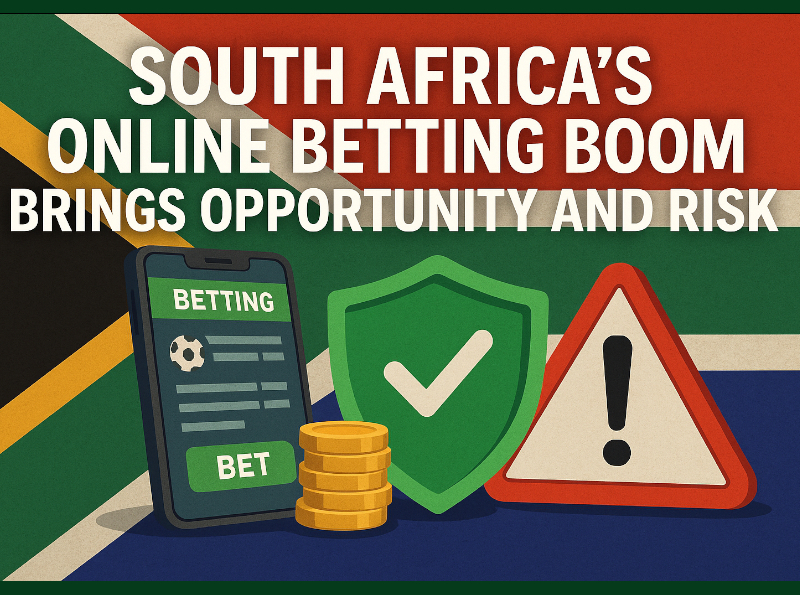
    South Africa’s online betting industry is expanding at a remarkable pace, drawing thousands of new players every month and generating billions of rand in wagers. According to the National Gambling Board’s latest sector report, South Africans wagered more than R1.14 trillion in the 2023/24 financial year (ending March 2024)—a 40 percent jump on the previous year—while gross gambling revenue climbed to R59.3 billion, up 25.7 percent year-on-year. Betting, which includes online wagering, has now overtaken casinos as the largest segment of the market, contributing 60.5 percent of total revenue, with almost half of all gambling activity estimated to take place online.

    But alongside the slick apps and generous promotions are growing concerns about player safety, the security of personal data and a rising number of unlicensed operators targeting local bettors. Regulation has not kept pace with this rapid growth, and many players remain unaware of the risks that come with gambling on unregulated platforms where fraudulent operators can disappear overnight with customer funds or manipulate games without oversight.

    The key dangers are often described as the “three S’s”: safety, security and sanity. Safety refers to whether a betting site is properly licensed and subject to South African law. Security concerns the protection of personal and financial information in an era of frequent data breaches. Sanity speaks to the social side of gambling, ensuring that betting remains entertainment rather than addiction.

    Amid these concerns, new resources are emerging to help players protect themselves. One example is Betline South Africa, a locally built platform that provides free tools to check whether a betting site holds a valid provincial gambling licence and offers educational content aimed at promoting responsible play.

    While dozens of affiliate sites promote betting operators to South African players, not all of them put consumer safety first. Many of these portals earn commissions for sending traffic to bookmakers, which means their priority is often driving sign-ups rather than verifying whether a platform is properly licensed or explaining the risks involved. In some cases, international affiliate networks list offshore operators that do not hold a South African provincial gambling licence, leaving players exposed to potential fraud or disputes with no local recourse.

    Platforms like Betline.co.za take a different approach by combining industry information with consumer protection. Instead of pushing players toward the highest-paying affiliate deals, Betline provides licence-checking tools, regulatory links and responsible-gambling resources so that readers can confirm a site’s legal status before creating an account. By focusing on education and transparency, the site aims to steer bettors toward operators that are both entertaining and compliant with South African law.

  • South Africa’s Online Gambling Debate: Why Regulation Makes More Sense

    South Africa’s Online Gambling Debate: Why Regulation Makes More Sense

    Online gambling in South Africa has grown fast thanks to smartphones and new betting platforms. The problem is that our laws haven’t kept up. Right now, only sports betting is technically legal, but anyone who’s been on a site knows there’s a lot more going on. That gap has sparked a heated debate — should government ban online gambling outright, or bring in proper rules?


    The Criticism

    Makashule Gana from the Rise Mzansi Party has been vocal about the dangers of online gambling. He says betting companies are targeting vulnerable groups like young people and grant recipients, and he’s even compared gambling to addictive drugs. His concerns aren’t totally off base — betting can become a problem if left unchecked — but the solution he pushes often leans toward harsh restrictions.


    Why the Laws Need an Update

    South Africa’s current online gambling laws date back to 2008. They only recognise fixed-odds sports betting, leaving everything else in a grey area. The result? Operators are running games that don’t fit the old rules, players are spending money anyway, and the state is missing out on tax revenue that could be put to better use.

    That’s where the Democratic Alliance’s Remote Gambling Bill comes in. Put forward in 2024, it calls for:

    • Licensing powers to be given to provinces
    • Stronger safeguards to protect minors
    • Clear compliance with FICA (ID verification rules)

    It’s not about encouraging reckless betting — it’s about recognising reality and putting proper guardrails in place.


    The Advertising Problem

    One of the areas where critics have a point is advertising. Gambling ads are everywhere, from TV to radio, and often run at times when kids can see them. The DA has also called this out, arguing for stricter controls. Instead of endless promos about jackpots, ads should include clear responsible gambling messages.

    This doesn’t mean shutting the industry down — it just means holding it to a higher standard.


    Why Regulation Wins Over a Ban

    Some people suggest banning online gambling entirely, like India has done with certain forms of real-money gaming. But that approach comes with big risks. A ban doesn’t stop people from betting — it just drives them to unregulated sites where there’s zero protection and no tax revenue for the country.

    The DA’s position is more balanced: regulate the industry, protect players, and make sure South Africa benefits instead of losing out. That way, the market stays above board, players are safer, and government earns revenue that can go back into communities.


    Last Thoughts

    South Africa’s gambling industry is clearly at a turning point. Calls for reform are getting louder, and something has to give. Outright bans might sound tough, but they don’t solve the real problems. Proper regulation, as the DA proposes, is the smarter path. It acknowledges the reality of online betting, sets clear rules for operators, and gives players the protection they need.

    At the end of the day, betting isn’t going away — the question is whether South Africa will finally modernise its laws to deal with it responsibly.